
Choosing period underwear is not about finding one pair that works for every person and every day. The right option depends on your flow, how long you want to wear it, the stage of your cycle, the clothes you are wearing and the fit you find comfortable. A pair that works well on a quiet morning may not be the one you prefer for sleeping, exercising or managing your heaviest day. It is more useful to think about real situations than to rely on a single absorbency label.
This guide helps you make those decisions with practical criteria. You will learn how to interpret your flow without becoming fixated on categories, why size and coverage matter, how to plan changes and which habits can help preserve technical fabrics. The goal is not to promise the same experience for everyone. It is to help you build a comfortable, realistic and adaptable period-care routine.
Quick answer
Start with three questions: how much flow you need to manage, how many hours you expect to wear the underwear and where you will use it. Then choose the size from your current measurements and check the length and position of the absorbent area. If your needs vary, a small rotation of different styles is usually more practical than expecting one pair to handle every day of the cycle.
Key points
- Flow changes throughout a period, so a small rotation with different absorbency levels is often more useful than buying every pair in the same style.
- The waistband and leg openings should feel secure without digging in, rolling or creating pressure. More absorbency cannot correct a poor fit.
- Coverage matters as much as capacity. For sleep or active days, you may prefer a wider absorbent area and a cut that stays stable while you move.
- Make your first tests at home and for shorter periods. This gives you room to observe comfort, surface moisture and the right changing interval for you.
- A waterproof pouch and a clean spare make changes away from home simple and discreet, especially while you are still learning your routine.
- Always follow the care label. Different technical fabrics can react differently to heat, detergent, fabric softener and drying methods.
Who this guide is for
- People who want to reduce disposable period products and include a reusable textile option in their routine.
- Anyone looking for underwear that can be worn alone in suitable situations or used as backup alongside another period product.
- Teenagers and adults who prefer a garment that feels closer to ordinary underwear and are willing to learn a basic changing and washing routine.
- People who want to organise their cycle with different pairs for light, medium and heavy days, sleep or specific activities.
When it may not fit
- If you expect one pair to work for any number of hours and every flow level without checking how it performs for you.
- If you cannot follow the washing and drying instructions or do not have a practical way to store used underwear when you are away from home.
- If you have a sudden change in bleeding, severe pain or other symptoms that need professional assessment. Absorbent underwear is not a diagnosis or treatment.
What you should know
Period underwear normally combines a layer next to the skin, inner layers designed to absorb and distribute liquid, and an outer barrier intended to help contain it. Performance depends on how those layers work together, the size of the absorbent panel and the way the garment fits. This is why two products described with similar absorbency can feel different in use.
Terms such as light, medium or heavy flow are useful starting points, but they do not replace your own experience. Bleeding can vary between days, cycles and even different hours of the same day. Position and movement also matter. When you sleep, liquid may travel towards the back of the garment. During exercise, a pair that shifts or folds may feel less secure. Good selection connects capacity, coverage and the situation in which the garment will be worn.
Size has a mechanical role. If the garment is too loose, gaps can form around the legs or waistband. If it is too tight, it may dig in, roll, leave stronger marks or move out of position. Measure your waist and hips according to the brand's instructions and compare them with the size chart for that specific style. Do not rely only on the size you wear in another shop, because patterns and fabric stretch vary.
It is also useful to distinguish a damp surface feeling from an actual leak. A change in sensation may tell you that it is time to change even when the garment is still containing your flow. During your first cycles, note when the sensation changes and how the underwear looks when removed. Your own record is more useful than copying someone else's timetable. If your bleeding is particularly heavy or unpredictable, plan more frequent checks and combine products if that is what makes you feel comfortable.
How to choose your first period underwear
Describe one real day of your cycle
Choose the first situation you want to solve: a workday, a night, a class, a trip or the final hours of your period. Think about when you normally change your current protection and what matters most to you: coverage, comfort, discretion or an easy change. A concrete scenario gives you a clearer buying criterion than a general absorbency claim.
Connect your flow with wearing time
Do not choose only from the words light, medium or heavy. Decide how long you would like to wear the garment before changing. Begin with a conservative interval and carry a spare. You can then increase or reduce that interval based on what you observe. Even high-absorbency underwear still needs to be checked on intense days.
Measure your waist and hips
Measure against the body without pulling the tape tight, then use the chart for the exact product. If you are between sizes, read the brand's guidance and consider how you like underwear to feel. You may prefer a firmer waistband for activity and a softer, more enveloping cut for sleep.
Check cut and absorbent coverage
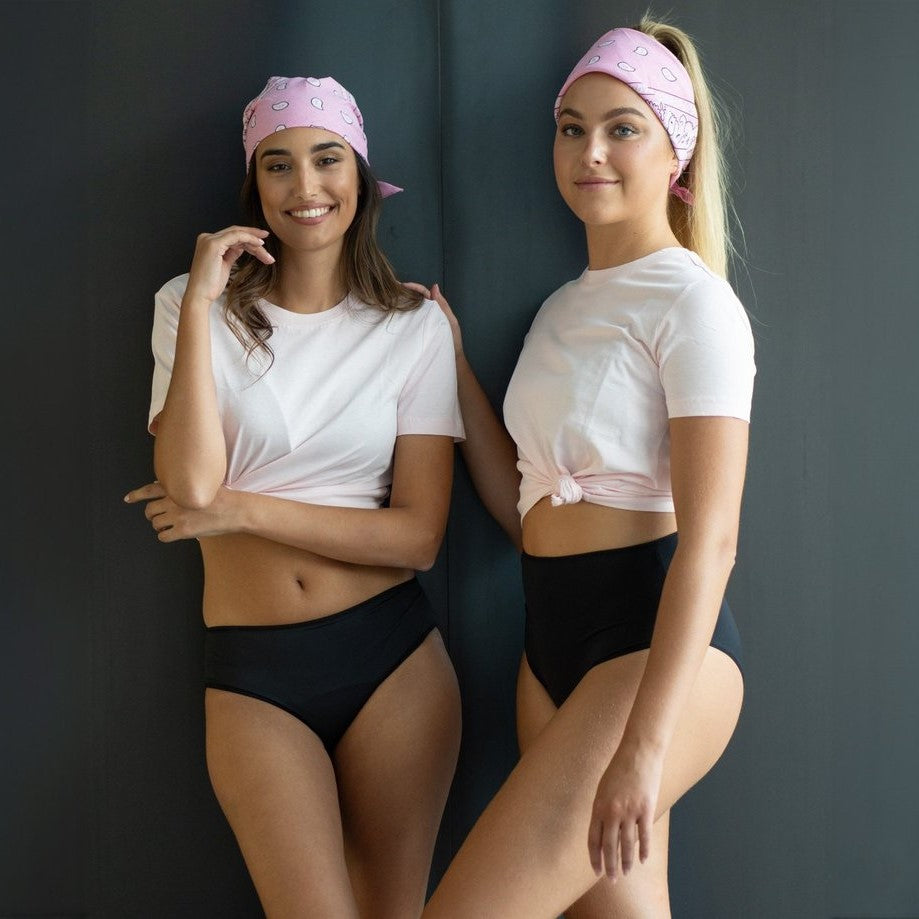
Look at the rise, leg shape and how far the technical panel extends at the front and back. Many people value extra rear coverage at night. Under fitted clothing, seam finish may matter more. The best cut is one that stays in place on your body during the activity you have planned.
Run a controlled first test
Try the pair at home or when changing is easy. Wear it for less time than the maximum you imagine and check how it feels while walking, sitting and standing. Note surface moisture, movement and whether the fit remains even. Repeat the test on a different day of your cycle before drawing conclusions.
Build a small rotation
Once you know what works, combine pairs for your usual situations: perhaps one for medium flow, one with more night coverage and one lighter style for the end of the cycle. Include washing and drying time in your calculation. A realistic rotation prevents you from depending on one pair always being ready.
Limits and checks
- Change the underwear if you notice saturation, persistent dampness, discomfort or an unusual odour. The suitable interval is personal and may change within one cycle.
- Seek medical advice if you experience a sudden increase in bleeding, severe pain, dizziness or other concerning symptoms. Period underwear is a textile aid, not a treatment.
- Do not place generic washing advice above the product label. Temperature, detergent and drying instructions can differ between technical fabrics.
- If irritation develops, stop using the garment, change, and review both the fit and laundry products. Seek professional advice if discomfort continues.
- For teenagers, keep the explanation simple and make a spare easy to access. Confidence grows when the routine is practised without pressure.
How to choose
Use this comparison as a starting point. Your final choice depends on your flow and how each cut fits your body.
| Option | Best fit | Consider |
|---|---|---|
| Light or moderate absorbency | The end of a period, spotting, calmer days or use as backup. | It may need more frequent changes if flow increases and should not automatically be treated as a heavy-day option. |
| High absorbency | Heavier days, longer plans with a spare available, or when you want additional capacity. | The technical area may feel thicker. You still need to observe saturation and adjust wearing time. |
| High-rise or enveloping cut | Sleep, rest or anyone who prefers more support and coverage around the abdomen and back. | It may show under low-rise clothes or feel too firm if the size is not right. |
| Lightweight or discreet cut | Fitted clothes, lighter days or when you prioritise a feel close to ordinary underwear. | Coverage may be smaller, so check that it matches your posture, movement and usual flow direction. |
Related products
When comparing the related Anaissa products, begin with the stated absorbency, size chart and length of the technical panel. You do not need to buy a complete collection at once. Choose the situation you most want to solve, test the fit and learn your changing interval. Add further pairs only when you know which cuts stay stable and which levels suit different days. Always review composition, care instructions and product-specific details before ordering.

Braga Menstrual de Bambú con Cierre de Velcro Velcrochip
€27.95Choose this product
Pack 2 Short Menstrual TEEN de Bambú – Flujo Abundante Mayder
€50.00Choose this product
2 tangas menstruales fabricadas en bambú Weekly
€50.00Choose this product
Bikini alto de baño menstrual+Braga menstrual flujo abundante Briggite
€49.95Choose this product
Braga de baño Menstrual Adolescentes Céline — Discreto, ultrafino y sin bultos
€28.00Choose this productUse and care
- Read the label before first use and follow any instruction to pre-wash the garment.
- After wear, rinse or store the garment as directed by the manufacturer. Use a reusable waterproof pouch when away from home.
- Avoid leaving a damp garment sealed for longer than necessary. Build laundering into a routine you can follow consistently.
- Use the recommended temperature and detergent. Avoid softener, bleach or other treatments unless the label explicitly allows them.
- Dry according to the instructions and make sure the multilayer area is completely dry before storing.
- Check seams, elastic and fabric regularly. If fit or observed performance changes, shorten wearing time and consider replacement.
Frequently asked questions
How many hours can I wear period underwear?
There is no universal number. It depends on flow, product capacity, activity and personal comfort. Start with conservative intervals, check the garment and change when you notice saturation, persistent dampness or discomfort. Follow the manufacturer's instructions as well.
How do I know which absorbency I need?
Relate your usual flow to the number of hours you want to wear the garment. A light option may suit the end of the cycle, while intense days may require more capacity or more frequent changes. Testing at home helps you build your own reference.
Should I order my usual underwear size?
Not automatically. Measure your waist and hips and use the chart for the exact style. Sizing differs across brands and patterns. The garment should stay in contact without gaps, but it should not dig in, roll or restrict movement.
Can I sleep in period underwear?
Choose a style suited to your flow with enough coverage for your sleeping position. Test it first in a controlled setting, protect bedding if that gives you confidence and plan changes according to your experience.
How do I change away from home?
Carry a clean pair and a waterproof pouch for the used garment. A discreet wash bag and a routine practised in advance make changes easier. Immediate rinsing is not necessary if the manufacturer's instructions allow you to transport it home.
Does period underwear always replace other products?
That depends on your flow, the garment and the situation. Some people wear it alone and others use it as backup. There is no single correct combination; choose the routine that gives you comfort and a realistic changing plan.
Next step
The best period underwear is not the pair that promises to solve every situation. It is the one that fits a specific moment in your cycle and remains comfortable on your body. Start with your measurements, your flow and a real scenario. Test with a safety margin, observe when you need to change and adjust the routine. That information will help you build a useful rotation, choose different coverage for day and night, and care for every garment according to its label. Your next step is to compare the related styles by absorbency, cut, coverage and care instructions.
Compare products and choose