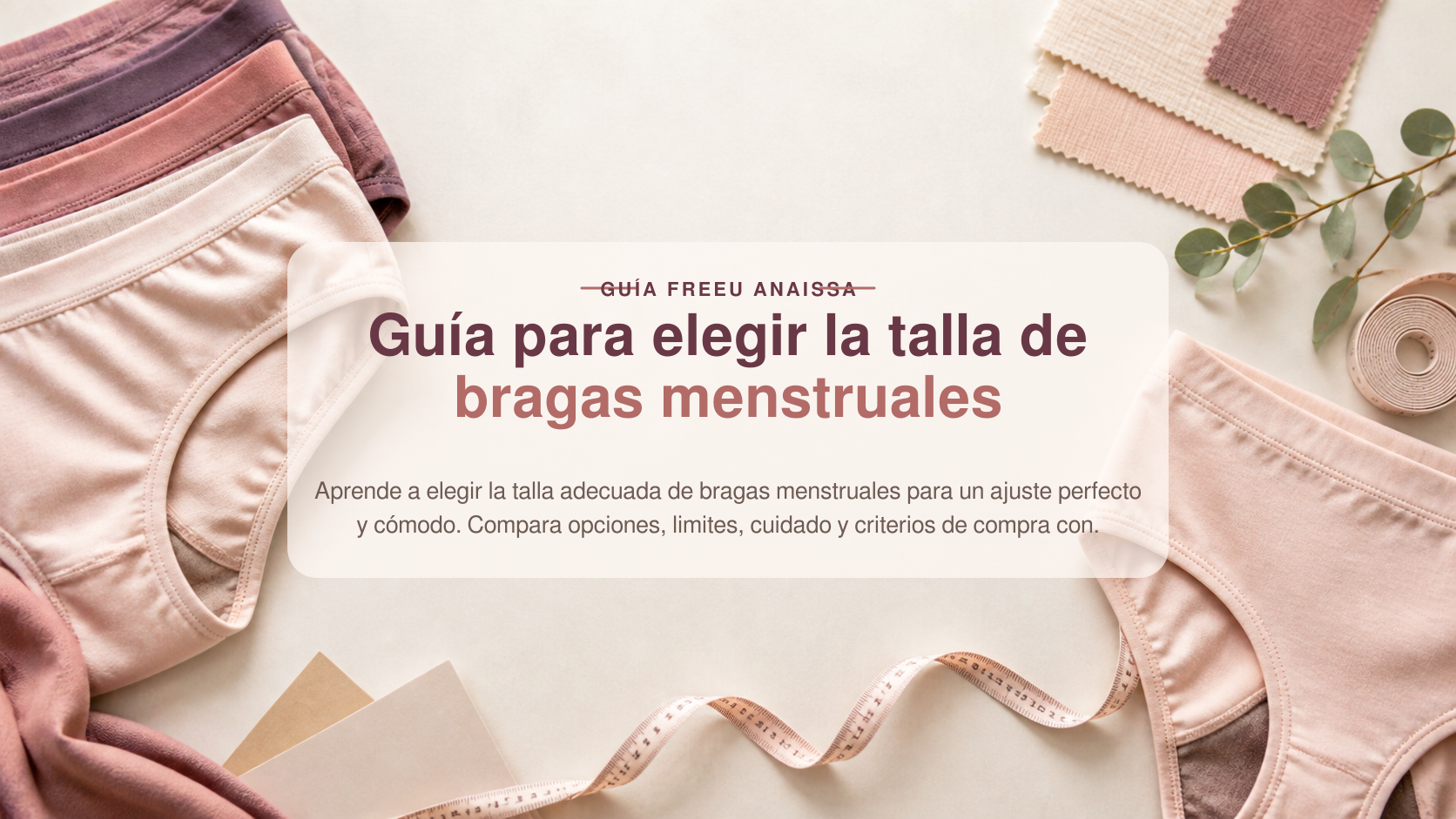

Choosing the correct size of a menstrual underwear is key to enjoying comfort, safety, and peace of mind during menstruation. At FreeU Anaissa we understand that questions about sizing, waistband and leg band fit, and coverage can create insecurity, especially when trying a new garment. This article offers a practical guide, evidence-based on real product data, and focused on people who doubt between sizes or want to understand how a menstrual garment should fit. We do not promise a perfect size for every body, but we provide clear criteria to make an informed decision and reduce returns. Throughout the article we point out decision criteria, limits of the recommendations, and best practices for caring for the garments, without attributing medical properties or absolute guarantees.
Quick answer
To choose the right size of menstrual underwear without forcing the fit, review three axes: waist fit, leg fit, and coverage. Start by measuring your waist at its narrowest point and compare with the brand's size chart. Make sure the garment does not compress the waist or the legs, and that the coverage is sufficient for your flow needs. On first use, check that there are no chafing or compression sensations and that you can move freely. If you are between two sizes, opt for the one that leaves less pressure on the waist and the sides of the hips, prioritizing comfort and mobility during usual activities.
See menstrual underwearKey points
- The fit should allow comfortable movement without compressing the waist or groin areas.
- Coverage should align with your usual flow and usage habits (day, night, sleeping).
- The first use is key to confirm that the chosen size works, without needing to adjust the garment repeatedly.
- Underwear with multiple layers and technological fabrics can offer greater absorption without tightening the waist.
- Reducing doubts and returns improves when consulting the technical data sheet and verifying that sizes fit the body.
- User experience can vary between models; compatibility between your morphology and the design influences the final fit.
Who this guide is for
- People who doubt between sizes and need clear guidance to choose.
- Those who want to understand how a menstrual garment should fit at the waist, leg bands, and coverage.
- Those who prefer a guide based on evidence from real product data and technical specifications.
When it may not fit
- Those seeking absolute guarantees of universal fit for all bodies.
- People requiring medical advice or claims of medical performance.
What you should know
The size of a menstrual underwear should fit across three axes: waist, leg bands, and coverage. A correct fit prevents pressure on sensitive areas and reduces the likelihood of discomfort or unwanted garment movement during the day or night. The FreeU Anaissa products analyzed in this article use soft and breathable materials (cotton, bamboo) and designs with front and/or back protection to offer security and comfort without relying on a single size. It is important to review the product sheet to understand the absorption system and layers, and to perform a fit test during the first use. Do not force the waist or leg bands, or expect a single size to satisfy all morphologies.
Step-by-step process to choose the right size without forcing the fit
Step 1: measure your waist and check the size chart
Take the waist measurement at its narrowest point and consult the brand's size chart to compare with your measurements. If your measurement falls between two sizes, consider the preferred feel (more snug or more loose) and the type of usage.
Step 2: evaluate waist fit
Place the underwear in the normal position. It should be comfortable without pressing the waist. If you notice continuous pressure or visible marks, the size could be smaller or the model may not suit your morphology.
Step 3: evaluate leg fit
Pay attention to the leg area: it should move freely without rubbing. A fit that compresses the legs can cause discomfort during the day or night.
Step 4: verify coverage
Appropriate coverage depends on your usual flow and the type of use. If the garment does not cover correctly, it could be uncomfortable or less functional for certain movements.
Step 5: try the first use
Wear the garment for a continuous period (day or night) to confirm that the fit is correct. Observe for chafing, irritation, or the need for repeated adjustments.
Limits and checks
- Garments that pinch at the waist or groin should not be worn continuously.
- If there is irritation, discontinue use and consult the technical sheet to review the fit and the model.
- Absorption and layering system should correspond to your usual flow; adjust the size if necessary to prevent shifts.
How to choose
Quick decision guide to choose size and model according to needs
| Option | Best fit | Consider |
|---|---|---|
| Comfortable waist and leg fit, daily use | Looking for day-long comfort without waist pressure. | May require a slightly larger size if between two. |
| More absorption for nights or high-flow days | Need for wider coverage without feeling overly tight. | Higher-absorption garments can be bulkier; check mobility. |
| Models with front and back protection | Seeking extra safety against leaks in different situations. | May require fit testing for each morphology. |
Related products
Among the available options, these real briefs offer a variety of fabrics and absorption profiles to cover different needs without relying on a universal size:
 Real product for this decision
Braga Menstrual de Algodón Bambú – Absorción Abundante Alba
34,95 EURSee menstrual underwear Real product for this decision
Braga Menstrual de Algodón Gran Absorción FreeU Anaissa – Boston
27,95 EURSee menstrual underwear Real product for this decision
Pack 2 Bragas Menstruales de Algodón | Flujo Abundante Alba
50,00 EURSee menstrual underwear Real product for this decision
Pack 2 Bragas Menstruales de Bambú Agadir
50,00 EURSee menstrual underwear Real product for this decision
Pack 2 Bragas menstruales de bambú flujo abundante Rose
50,00 EURSee menstrual underwearUse and care
- Machine wash at an appropriate temperature according to the data sheet, preferably with similar fabrics.
- Avoid bleaches that could affect the fabric and absorption.
- Air dry when possible to preserve elasticity and comfort.
Frequently asked questions
What do I do if the size between two fits is good at the waist but tight at the leg?
Consider opting for the larger size or a model with a looser fit in the leg area. Check the technical data sheet to understand the size system and how it distributes in the design.
Does coverage change between cotton and bamboo models?
Yes, the fabric can influence the feel of fit and comfort, but coverage depends more on the rise design and garment pattern.
What should I do if I notice odor or leakage during the first use?
Check that the size is suitable for your usual flow and that the model has the desired protection. If in doubt, try another model or consult the absorption and layering sheet.
How do I ensure the garment does not shift during the day?
The waist and leg band fit should allow movement without shifting the garment. If it moves, check the size or model and consider wearing the garment with a top or external garment that helps stabilize it.
What should I do before the first use to ensure a good fit?
Read the model data sheets, identify the layering system and the fabric. Do a fit test with the garment on at home and verify comfort, without forcing the waist or leg bands.
What should a person who uses different sizes most of the month do?
It can be useful to have more than one model with different cuts to alternate according to the day. Choosing models with front and/or back protection can help adapt coverage to different outfits or activities.
Next step
Choosing the size of a menstrual underwear should not be based on a single universal size. Adjusting the waist, reviewing coverage, and confirming with a first use are fundamental steps to reduce doubts and returns. At FreeU Anaissa we offer clear technical sheets and a variety of models so you can compare and decide with evidence from real product data. If you need additional help, consult the guide and the product sheets to see which model best fits your body and habits.