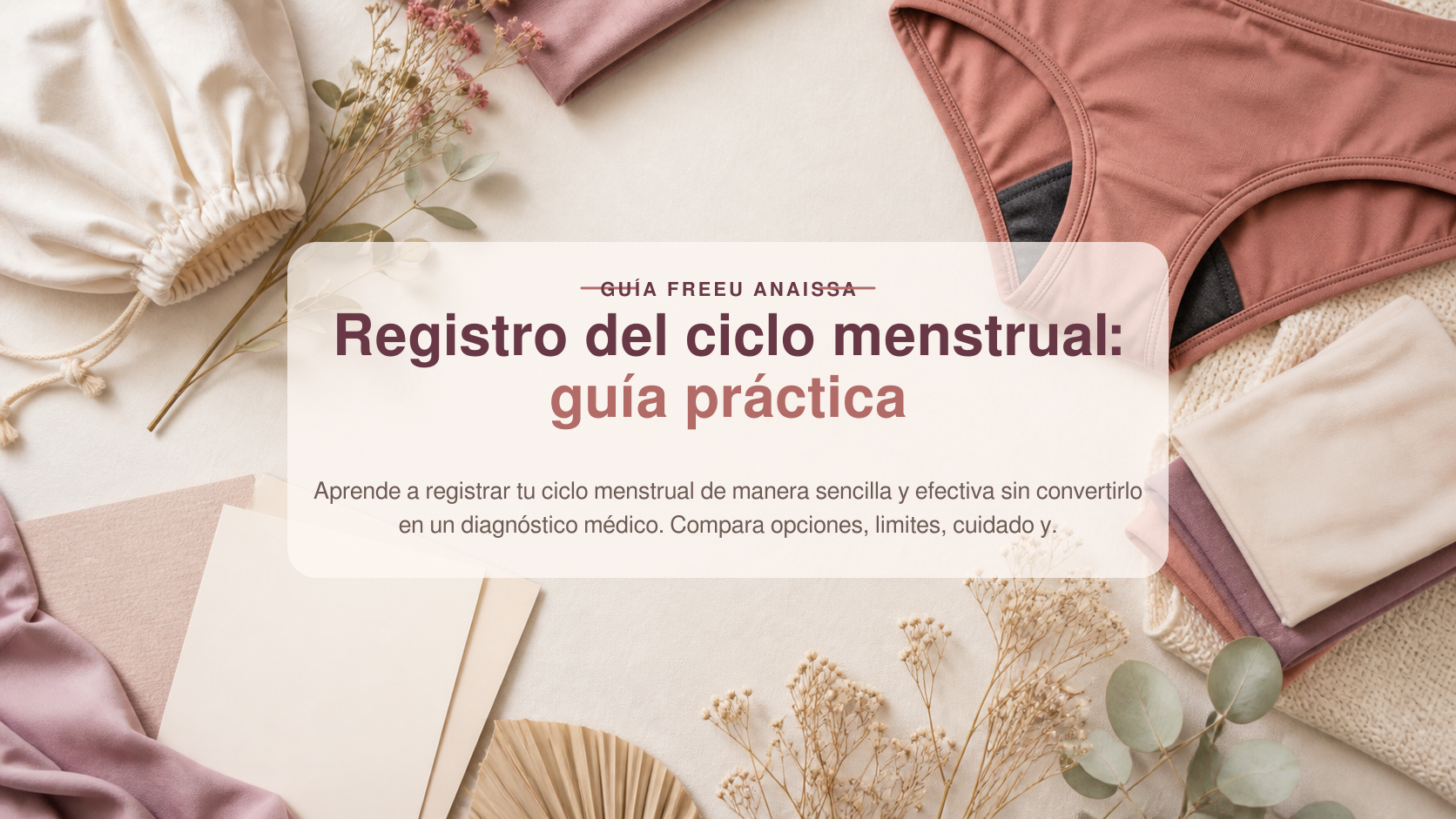

Registering your menstrual cycle is a fundamental practice to understand your body better and how it responds to the different stages of the cycle. However, it is crucial to do so in a way that it does not become a medical diagnosis. In this article, we will guide you through the steps needed to keep an effective record of your menstrual cycle, what aspects to consider, and how this can influence the choice of menstrual products suitable for you. We will also discuss the importance of observation and self-care, as well as the need to consult a health professional if there are any significant changes. Menstrual health is a vital aspect of women's overall well-being, and knowing your cycle can help you make more informed decisions about your personal care.
Quick answer
To record your menstrual cycle, note the start and end dates of your period, the duration of each phase, and any relevant symptoms. Use an app or a journal to facilitate tracking and be sure to review your notes regularly to identify patterns. This will help you make informed decisions about your menstrual health and the choice of suitable products.
Key points
- Menstrual tracking helps identify patterns and changes in your cycle, which can be useful for planning and self-care.
- It does not replace a professional medical evaluation; any significant changes should be discussed with a doctor.
- It is useful for selecting appropriate menstrual products, as it allows you to understand your flow and preferences.
- Regular monitoring can help you anticipate your cycle and prepare better for your period.
- Symptom observation can be valuable, but should not be interpreted as a medical diagnosis.
Who this guide is for
- Adult women who want to understand their cycle and their menstrual health.
- Adolescents who are starting to menstruate and want to learn about their body.
- Families seeking to educate about menstrual health and support their daughters.
When it may not fit
- People seeking a specific medical diagnosis.
- Those not interested in tracking their menstrual cycle.
What you should know
The menstrual cycle is a natural process that can vary in duration and symptoms from person to person. Recording your cycle allows you to observe patterns, such as the duration of flow or the emergence of premenstrual symptoms. However, it is essential to remember that any significant change should be consulted with a health professional. The World Health Organization emphasizes the importance of menstrual health and cycle tracking as part of women's general well-being. By keeping a record, you empower yourself to make informed decisions about your health and you can also contribute to a broader conversation about menstrual health in your community. It is important to note that menstruation is a unique experience for each person, and what is normal for one may not be for another. Therefore, tracking helps you establish your own standard of normality.
How to register your menstrual cycle
Step 1: Note the first day of your period
Record the first day of bleeding as the start of your cycle. This is Day 1 and is essential for calculating the duration of your cycle.
Step 2: Record the length of your cycle
Note how many days your period lasts and the time between one cycle and another. This will help you identify whether your cycle is regular or irregular.
Step 3: Observe and record symptoms
Keep track of any symptoms you experience, such as cramps, mood changes, fatigue, or any other symptom you consider relevant.
Step 4: Review your notes regularly
At the end of each cycle, review your notes to identify patterns or changes. This will give you a clearer view of your menstrual health.
Step 5: Use digital tools if needed
Consider using menstrual tracking apps that can make recording easier and offer you reminders and analyses about your cycle.
Step 6: Share your records with a health professional
If you notice significant or concerning changes, share your records with a doctor to receive appropriate guidance.
Step 7: Reflect on your experience
At the end of each month, take time to reflect on what you have recorded. This can help you better understand how your cycle affects your daily life.
Step 8: Maintain a flexible approach
Remember that cycles can vary and it is normal to have some irregularities. Keep an open and flexible attitude toward your record.
Limits and checks
- Any significant change in your cycle should be consulted with a health professional.
- The record should not be used to diagnose medical conditions; it is a self-awareness tool.
- Do not ignore concerning symptoms; it is always best to consult a doctor if you have doubts.
How to choose
When choosing menstrual products, consider the following:
| Option | Best fit | Consider |
|---|---|---|
| Bikini menstrual Bimba | Protection in the water up to 4 hours, ideal for aquatic activities. | May not be suitable for very heavy flows, so check your flow before use. |
| Pack 2 Short Menstrual TEEN bamboo | Heavy flow and comfort, perfect for growing adolescents. | Requires specific washing care to maintain its effectiveness. |
| Pack x2 Bamboo Soft Underwear – Cloé for Heavy Flow | Everyday use and comfort, with a design that fits regular underwear. | May not be the best option for those who prefer other menstrual formats. |
| Pack x2 Teen Marie Shorts – Heavy Absorption | Adolescents with heavy flow, offering a comfortable and safe option. | Requires specific washing care to ensure durability. |
Optional products for this context
We recommend exploring options such as the Bikini menstrual Bimba or the Pack 2 Short Menstrual TEEN bamboo, which offer protection and comfort during your cycle. Both products are designed to adapt to different flows and needs, allowing you to choose the one that best fits you. Remember that choosing the right product can depend on your flow, daily activities, and personal preferences. When considering your options, it is important that you feel comfortable and secure with the product you choose, as this can influence your experience during your menstrual cycle.
 Optional practical example
Bikini menstrual Bimba — protección hasta 4 horas en el agua 2 piezas
49,95 EURSee menstrual underwearInstitutional sources
General information from public-health organizations; it does not replace individual medical advice.
 Optional practical example
Bikini menstrual brasileño 2 piezas | Flujo abundante Bimba
49,95 EURSee menstrual underwear Optional practical example
Pack 2 Short Menstrual TEEN de Bambú – Flujo Abundante Mayder
50,00 EURSee menstrual underwear Optional practical example
Pack x2 Bragas Menstruales Lenceras de Bambú – Flujo Abundante Cloé
50,00 EURSee menstrual underwear Optional practical example
Pack x2 Shorts Menstruales Teen Marie · Absorción Abundante
39,95 EURSee menstrual underwearUse and care
- Wash menstrual products following the manufacturer's instructions to ensure durability and effectiveness.
- Avoid using fabric softeners or whitening agents in washing, as they can affect the material quality.
- Air dry whenever possible to extend the life of the products.
- Store products in a dry and cool place to maintain their integrity.
- Review the care instructions specific to each product to maximize performance.
- Make sure to check labels and follow washing and drying recommendations.
Frequently asked questions
Is it necessary to register my menstrual cycle?
It is not mandatory, but it can help you understand your body better, your health patterns, and choose appropriate products.
What should I do if I notice changes in my cycle?
Consult a health professional if you observe significant changes, such as variations in duration or flow.
How can I tell if my cycle is regular?
A regular cycle typically lasts between 21 and 35 days. If your cycles are shorter or longer, or vary significantly, consider talking to a doctor.
What tools can I use to record my cycle?
You can use a journal, a spreadsheet, or specific tracking apps that offer reminders and analyses.
Can I use reusable menstrual products if I have a heavy flow?
Yes, there are options designed specifically for heavy flows, such as menstrual underwear and menstrual bikinis. Be sure to choose the right product for your flow.
Is it safe to use reusable menstrual products?
Yes, as long as you follow the manufacturer's care and washing instructions. This helps maintain hygiene and product effectiveness.
What should I consider when choosing a menstrual product?
Consider your flow, comfort, activities you will perform, and your personal preferences. It is important that the product fits your needs.
How can I improve my experience with reusable menstrual products?
Make sure to follow washing instructions, try different styles and brands to find what best fits you, and keep a record of your cycle to anticipate your needs.
Next step
Registering your menstrual cycle is a useful practice that can provide you with a clearer view of your health. Remember that this record does not replace medical care, and any worrisome change should be evaluated by a professional. In the end, knowing your cycle empowers you to make informed decisions about your health and well-being. Explore different menstrual products that suit your needs and always follow care instructions to ensure their effectiveness. Menstrual health is an important aspect of your overall well-being, and keeping a record can be a first step toward taking better care of yourself.