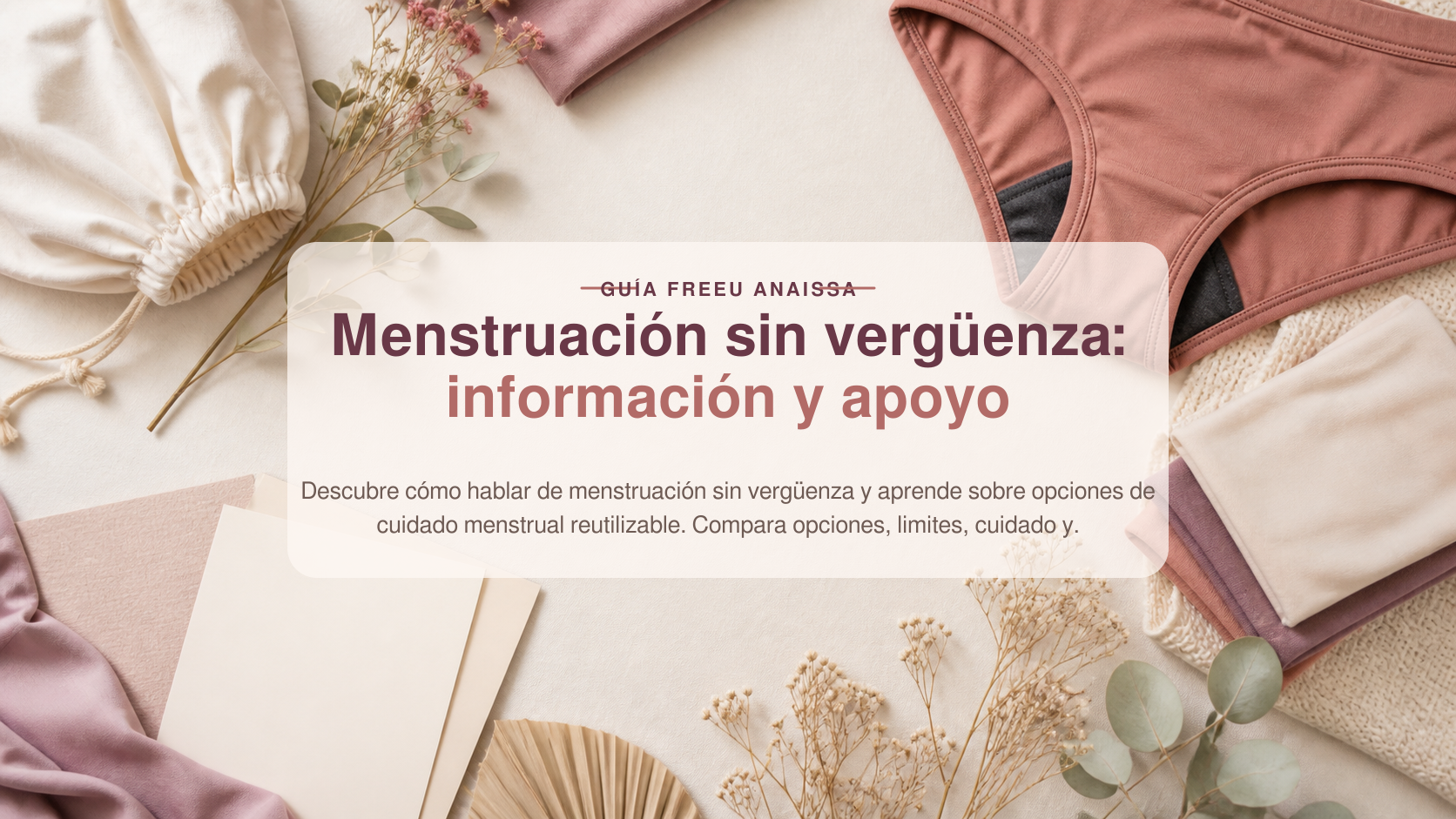

Menstruation is a natural process that affects half of the world's population; however, it remains a topic surrounded by taboos and shame. Talking about menstruation without shame is essential to normalize this experience and foster an environment of support and understanding. In this article, we will explore the importance of speaking openly about menstruation, the options for reusable menstrual protection, and how to take care of our menstrual health. Additionally, we will provide practical information so you can make informed decisions about your menstrual care and that of your loved ones. Menstruation should not be a topic of shame, but an opportunity to educate and empower those who experience it.
Quick answer
Talking about menstruation without shame means opening an honest and educational dialogue about this natural process, supporting those who experience it with information and appropriate options. This not only helps destigmatize menstruation but also promotes a better understanding of the needs and concerns of those who menstruate.
Key points
- Menstruation is a natural process and should not be a taboo topic.
- There are several reusable menstrual protection options that are practical and sustainable.
- Education and support are key to destigmatizing menstruation.
- Knowing the features of each product helps make informed decisions.
- Proper care of menstrual products is essential for their effectiveness and durability.
- Openly talking about menstruation can help reduce anxiety and fear associated with it.
Who this guide is for
- Adult women seeking information about their cycle.
- Adolescents who are starting to menstruate and need support.
- Families who want to educate their daughters about menstruation.
- Educators who want to address the topic in an inclusive way.
- People interested in sustainable menstrual care options.
When it may not fit
- People seeking specific medical solutions.
- Those who are not interested in menstruation as a topic of conversation.
What you should know
Menstruation is a biological process that occurs monthly in women and people with a uterus. It is essential to understand that talking about this topic without shame not only helps normalize it but also allows people to share their experiences, concerns, and needs. The World Health Organization and UNICEF highlight the importance of menstrual health and access to appropriate hygiene products, as well as education on this topic. The lack of information and the stigma associated with menstruation can lead to misinformation and lack of access to suitable products, affecting the quality of life of many people. Therefore, it is fundamental to create an environment where one can talk openly about menstruation, which benefits not only those who menstruate but also educates those who do not.
How to talk about menstruation without shame
Educate yourself about menstruation
Learn about the menstrual cycle, its phases, and what it entails. Knowing the topic will help you feel more comfortable talking about it.
Create a safe environment
Encourage a space where people feel comfortable sharing their experiences without fear of judgment. This can include conversations at home, at school, or in women’s groups.
Use inclusive language
Use language that includes all people who menstruate, avoiding terms that may be exclusive. This helps everyone feel represented and understood.
Share experiences
Encourage people to share their stories and challenges related to menstruation to foster empathy and understanding. This can help demystify the process and normalize it.
Offer support
Being available to listen and offer help to those who need it can make a difference in someone’s menstrual experience. Sometimes, just listening can be a great support.
Promote ongoing education
Encourage the pursuit of updated information and resources about menstrual health for you and your community. This can include workshops, talks, or online resources.
Include men in the conversation
It is important that men and non-menstrual people are also informed about menstruation so they can be allies and support those who menstruate.
Limits and checks
- It is essential to consult a health professional if there is any change or concerning discomfort during the menstrual cycle.
- Make sure to follow the manufacturer’s instructions for the care of reusable menstrual products.
- It is advisable to perform allergy tests if you are using a new type of menstrual product for the first time.
How to choose
When considering menstrual protection options, it is helpful to evaluate different factors. Here is a guide to help you make informed decisions.
| Option | Best fit | Consider |
|---|---|---|
| Menstrual panties | People seeking comfort and ease of use, especially during the day. | May require more care in washing and drying. |
| Menstrual bikinis | Those who want to enjoy water during their period, such as in the pool or beach. | Limited for water use for a specific period. |
| Menstrual shorts | Adolescents seeking a discreet and practical option for daily use. | May be less well known than other formats, which can raise questions. |
| Reusable pads | People who prefer a more traditional yet sustainable option. | Require special care and frequent washing. |
| Menstrual cups | Those seeking a long-lasting option with lower environmental impact. | May require initial learning for proper use. |
| Disposable pads | People who prefer a single-use option and do not want to worry about washing. | Create more waste and may be less sustainable. |
Optional products for this context
For those seeking reusable menstrual protection options, consider the Bikini menstrual Bimba, which offers protection up to 4 hours in the water, ideal for enjoying water activities. Also available is the Pack 2 Menstrual Panties for Girls from Cotton University, perfect for early menstruations, providing comfort and security. Finally, the Pack 2 Teen Bamboo Short Menstrual, designed specifically for heavy flow, is an excellent option for adolescents seeking a practical and discreet solution. These products are not only functional but also contribute to sustainability by being reusable.
 Optional practical example
Bikini menstrual Bimba — protección hasta 4 horas en el agua 2 piezas
49,95 EURSee menstrual underwearInstitutional sources
General information from public-health organizations; it does not replace individual medical advice.
 Optional practical example
Pack 2 Bragas Menstruales para Niñas de Algodón University
50,00 EURSee menstrual underwear Optional practical example
Pack 2 Short Menstrual TEEN de Bambú – Flujo Abundante Mayder
50,00 EURSee menstrual underwearUse and care
- Wash menstrual panties according to the manufacturer’s instructions to ensure their durability and effectiveness.
- Air dry and avoid using bleach to maintain the material’s quality.
- It is recommended to wash reusable menstrual products before first use to remove any manufacturing residues.
- Store the products in a clean, dry place to prevent the buildup of bacteria.
Frequently asked questions
Why is it important to talk about menstruation?
Talking about menstruation helps destigmatize the topic, fosters education, and allows people to share their experiences and needs, creating a more understanding environment.
What menstrual protection options exist?
There are various options such as menstrual panties, menstrual bikinis, and menstrual shorts, each with specific characteristics for different needs and lifestyles.
How to properly care for reusable menstrual products?
It is essential to follow the manufacturer’s instructions for washing and drying, ensuring their effectiveness and durability. Generally, it is recommended to rinse with cold water and wash by hand or on a gentle cycle.
Are menstrual panties suitable for heavy flow?
Yes, there are menstrual panties designed specifically for heavy flow, offering greater absorption capacity and comfort.
Can I use reusable menstrual products if I have sensitive skin?
Most reusable products are made of soft, breathable materials. However, it is advisable to check the product specifications and perform a test if you have sensitive skin.
What should I do if I have leaks with reusable menstrual products?
If you experience leaks, check that the product is properly fitted and that you have followed usage and care instructions. It may be necessary to try different styles or sizes.
Is it normal to have premenstrual symptoms?
Yes, many people experience premenstrual symptoms such as mood changes, cramps, or breast tenderness. If these symptoms are severe, it is advisable to consult a health professional.
How can I talk to my kids about menstruation?
It is important to approach the topic openly and honestly, using language appropriate for their age. You can start by explaining what menstruation is and why it is a natural process.
Next step
Talking about menstruation without shame is a crucial step toward normalizing this natural experience. Education, support, and access to reusable menstrual protection options are essential to empowering those who menstruate. By opening the dialogue, we contribute to a more understanding and respectful environment. Remember that every person has unique needs, and it is important to explore the different options available to find the one that best fits you. Do not hesitate to share this information with those around you and foster an open conversation about menstruation.